 PlateProbe
The ingredient list is in order
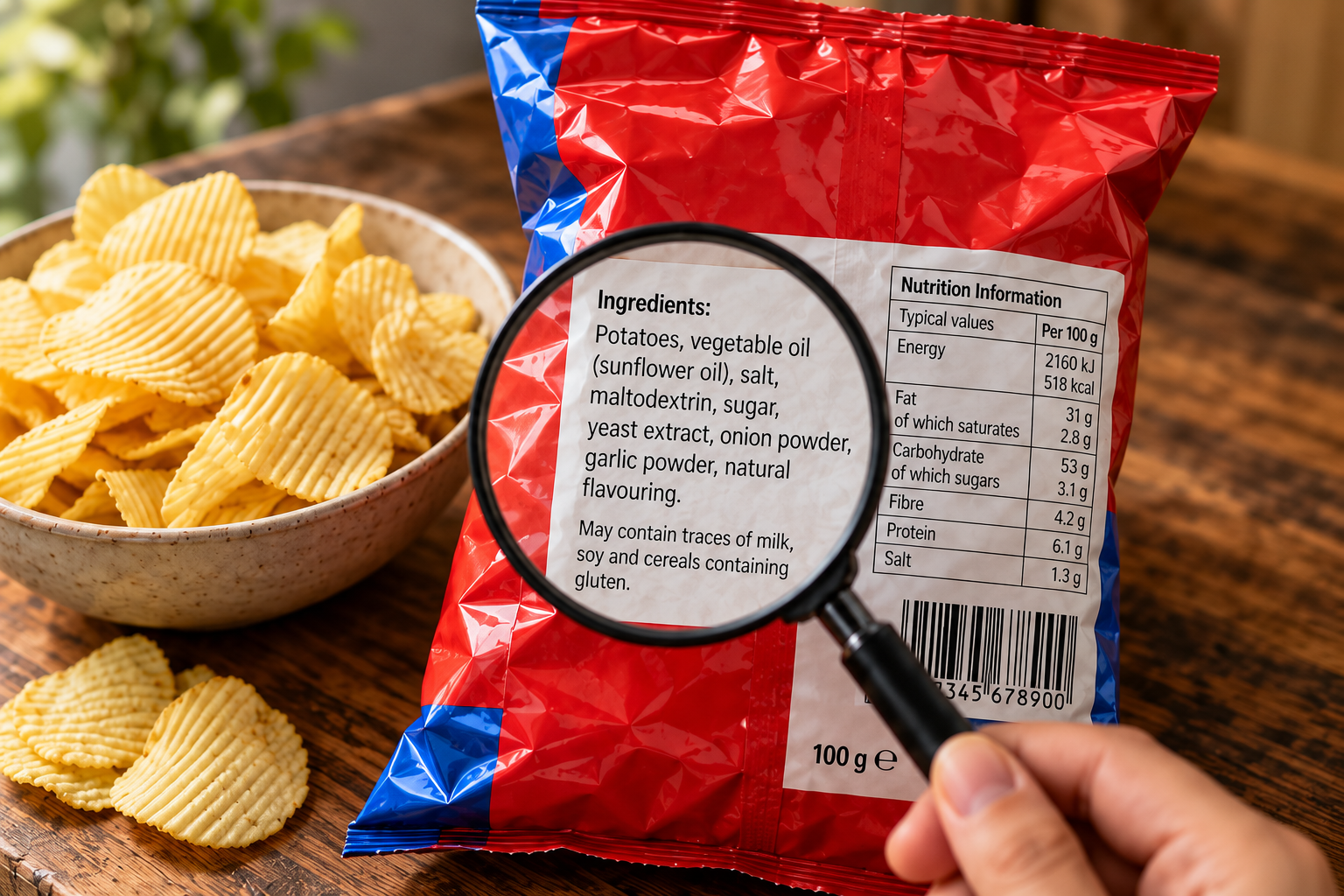
Regulation 5(2)(b) of the Labelling and Display Regulations, 2020 requires ingredients "in descending order of their composition by weight or volume" at the time of manufacture.
The first ingredient is the biggest. That single rule turns the list into a rough recipe.
In force — Labelling and Display Regulations, 2020, reg 5(2)
| Where it sits | What it means |
|---|---|
| First | The ingredient there is more of than any other. If it is sugar, refined flour or oil, that is the main thing in the pack. |
| Top three | Together these usually make up most of the product. |
| Last few | Small amounts — flavours, colours, emulsifiers, preservatives. |
| In brackets | A compound ingredient with its own ingredients list |
Four details that change the reading
Sugar can be split. The rule orders ingredients by name, so sugar, glucose syrup, invert syrup and honey each take their own place. Add the places together before deciding how much sweetener there is. The nutrition panel's "added sugars" line gives the total.
Small compound ingredients may be collapsed. Where a compound ingredient is under 5 per cent of the food, its own ingredients need not be listed, except food additives doing a job in the final product (reg 5(2)(e) proviso).
Class names are permitted. The regulation allows class titles for some ingredients — "vegetable oil", "starch", "spices", "cocoa solids", "vitamins", "minerals" — so a list may not name the exact oil or spice.
Water counts. Added water must be listed unless it is part of a brine, syrup or broth already declared, or has evaporated during manufacture (reg 5(2)(f)).
When the pack must say how much
Regulation 5(2)(g) requires the ingoing percentage of an ingredient where the pack emphasises it "through words or pictures or graphics", or where the ingredient is essential to characterise the food and a shopper would expect it. A biscuit sold on its almonds, with almonds on the front, must say what percentage of the recipe is almond. The exceptions: flavouring agents such as spices and herbs, a name that would not mislead, drained-weight products, foods with their own specific rule, a serving-suggestion picture, and added vitamins and minerals already in the nutrition panel.
So the percentage is the number to look for whenever the front of the pack leads with an ingredient. If the fruit, nut, millet or protein is the selling point, the back must put a figure on it.
Sources
FSSAI amendments page for the Labelling and Display Regulations, 2020, checked 30 Sep 2026.