 PlateProbe
What high protein has to mean
"High protein" is a regulated claim in India. It is not a share of calories and it is not a fixed number of grams. Schedule I of the Food Safety and Standards (Advertising and Claims) Regulations, 2018 sets it as a percentage of the Recommended Dietary Allowance, and lets the maker meet it on any one of four bases.
In force — Advertising and Claims Regulations, 2018, Schedule I item 11
| Claim | Per 100 g (solids) | Per 100 ml (liquids) | Per 100 kcal | Per serving |
|---|---|---|---|---|
| Source of protein (also "contains", "provides") | 10% of RDA | 5% of RDA | 5% of RDA | 10% of RDA |
| High / rich in protein | 20% of RDA | 10% of RDA | 10% of RDA | 20% of RDA |
Which RDA
Regulation 2(1)(n) points to the current ICMR nutrient requirements and RDAs for Indians. The 2020 ICMR-NIN report sets the adult protein RDA at 0.83 g per kg of body weight per day — 54.0 g a day for the reference man (65 kg) and 45.7 g for the reference woman (55 kg). The claims regulation does not say which reference person to use, so the gram equivalents below are shown both ways.
| Claim, per 100 g of a solid food | Against 54.0 g/day (reference man) | Against 45.7 g/day (reference woman) |
|---|---|---|
| Source of protein (10% RDA) | at least 5.4 g | at least 4.6 g |
| High in protein (20% RDA) | at least 10.8 g | at least 9.1 g |
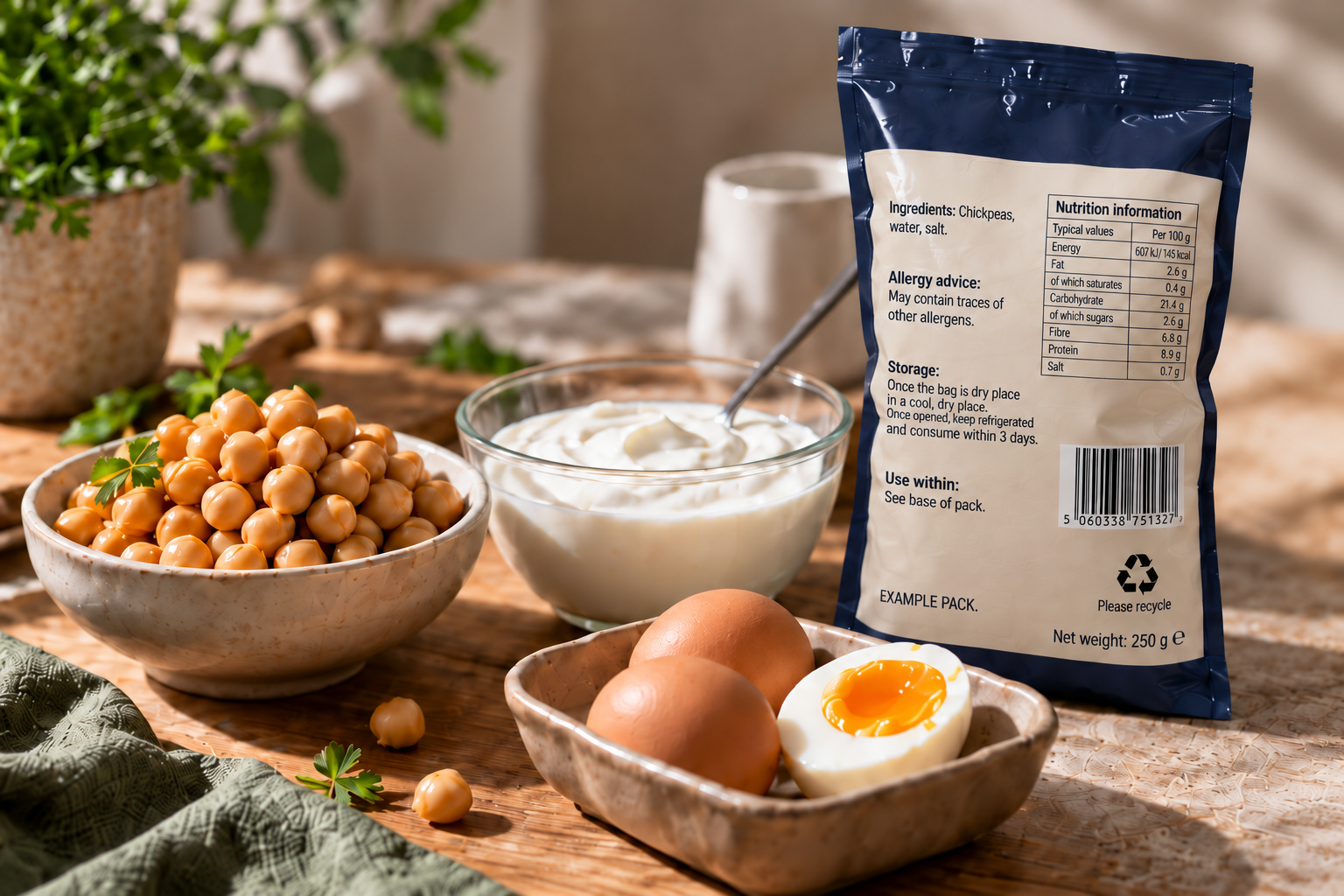
Two cautions on the table. The "per serving" route uses the serve size the maker declares, so a large serve makes the claim easier to reach; compare per 100 g when in doubt. And the same percentages apply per 100 kcal, which favours low-energy foods: a product with 100 kcal and 5.4 g protein per 100 g qualifies as a source on the per-kcal basis.
What the claim does not cover
Protein quality. The claim counts grams against the RDA; it says nothing about amino-acid completeness. ICMR-NIN itself notes that people on cereal-based diets with low-quality protein need about 1 g/kg/day.
The rest of the pack. A high-protein bar can also be high in sugar or saturated fat. The claim is about one nutrient.
Supplements. Schedule I, Note 1 sends protein powders and similar products sold as health supplements to the separate 2016 nutraceutical regulations. The thresholds above are for ordinary foods.
If a product makes a function claim about protein — muscle, growth, repair — regulation 7(1)(b) requires it to be at least a "source" under Schedule I first. No protein content, no protein story.
Protein in four reference portions
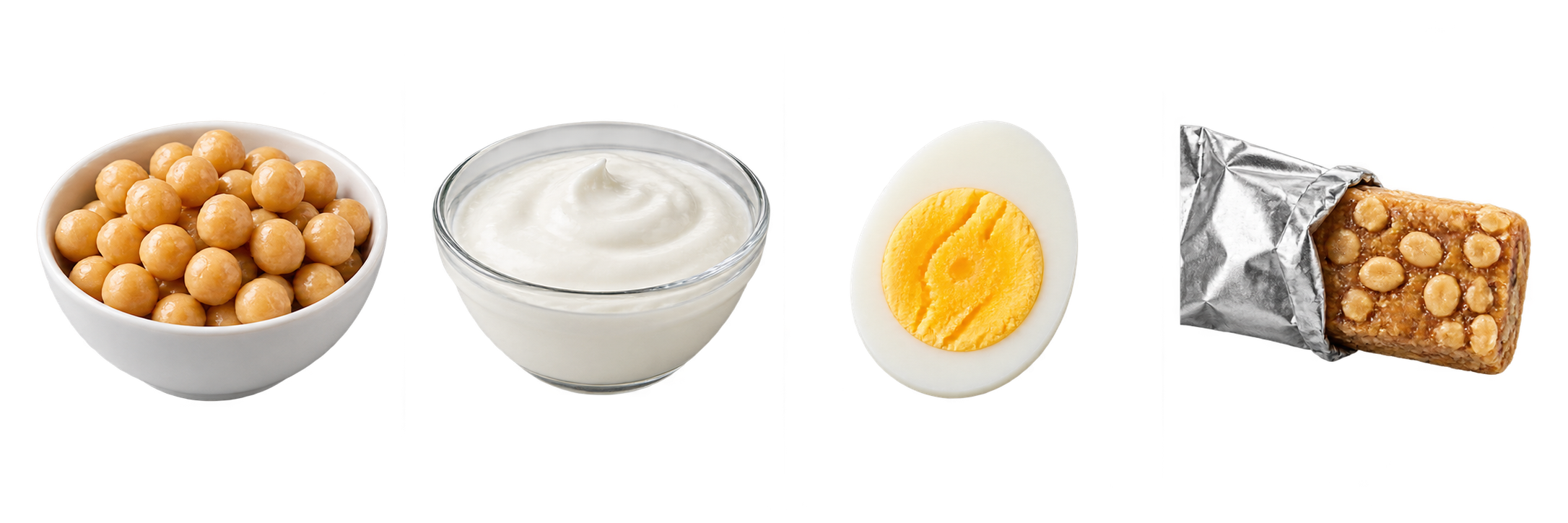
Cooked chickpeas
1 cup, boiled without salt
14.5 g proteinPlain whole-milk yogurt
170 g
5.9 g proteinLarge boiled egg
1 egg, 50 g
6.3 g proteinExample protein bar
Per bar · example label
10 g proteinReference-food values vary. The bar is an example label, not a verified product. Reference values: NDSU, reviewed November 2017; USDA, 2018; University Hospitals egg reference (publication date not stated).
Sources
ICMR-NIN, A Brief Note on Nutrient Requirements for Indians, the RDA and EAR, 2020: protein RDA 0.83 g/kg/day, EAR 0.66 g/kg/day; Table 2a (adult man 65 kg: 54.0 g/day; adult woman 55 kg: 45.7 g/day); footnote on cereal-based diets (1 g/kg/day).
FSSAI amendments page for the Advertising and Claims Regulations, 2018, checked 30 Sep 2026.