 PlateProbe
100 g or one serving?
An Indian nutrition panel shows two sets of numbers. One is per 100 g or 100 ml. The other is per serve, with a percentage against a daily allowance. They are both required, they answer different questions, and the second one is only as honest as the serve size the manufacturer picked.
In force — Labelling and Display Regulations, 2020, reg 5(3)
What the rule requires
Regulation 5(3)(b) of the Food Safety and Standards (Labelling and Display) Regulations, 2020 requires nutritional information per 100 g or 100 ml, or per single-consumption pack, together with the per-serve percentage contribution to the Recommended Dietary Allowance. The panel must list energy (kcal), protein, carbohydrate with total sugars and added sugars, total fat with saturated fat, trans fat and cholesterol, and sodium. It must also state the serve size in grams or millilitres and the number of serves in the pack.
The percentages are worked out against fixed daily figures written into the regulation:
Who decides the serve
The regulation defines a serve as "an amount of food customarily consumed per eating occasion or as defined on the label". In practice the manufacturer sets it. A small serve makes every per-serve number and percentage smaller. That is why the per-100 g column is the one to use when comparing two products: it is the same base for both, and the manufacturer cannot move it.
| Daily reference used for the % column | Value |
|---|---|
| Energy | 2,000 kcal |
| Total fat | 67 g |
| Saturated fat | 22 g |
| Trans fat | 2 g |
| Added sugar | 50 g |
| Sodium | 2,000 mg (5 g salt) |
The same pack, two ways of reading it
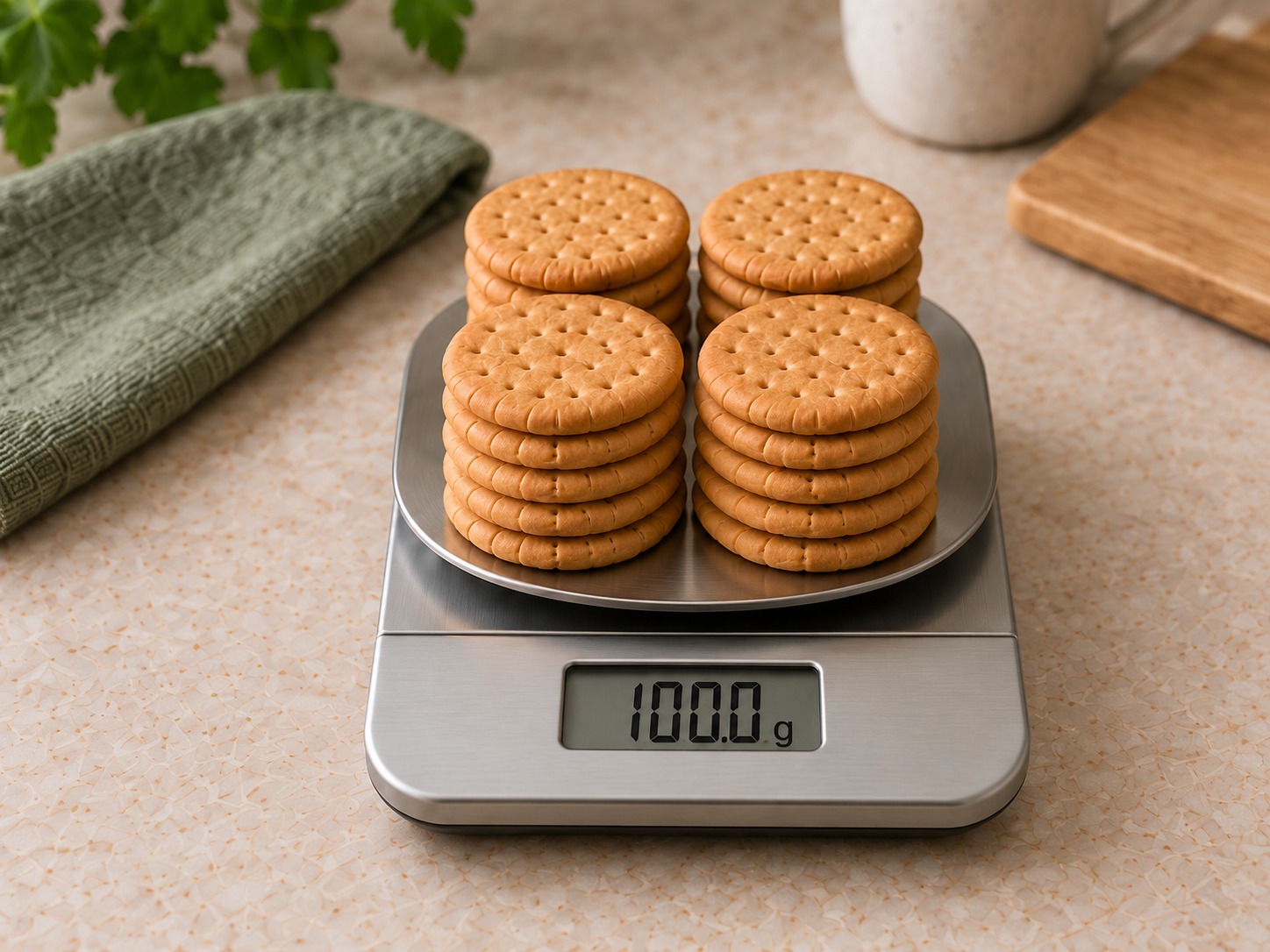
Take a 100 g pack of biscuits that declares 25 g sugars per 100 g and a serve of 20 g (five serves per pack).
| Reading | Sugars | What it tells you |
|---|---|---|
| Per 100 g | 25 g | A quarter of the biscuit is sugar. Use this to compare with another biscuit. |
| Per serve (20 g) | 5 g | What one declared serve delivers. Only true if you stop at four biscuits. |
| Whole pack | 25 g | Half the 50 g added-sugar daily reference, if the sugar is all added and the pack is eaten in one sitting. |
Three things to know
Per 100 g is for comparing products. Per serve is for judging a portion, and only if the serve matches what you eat.
The declared values carry a legal tolerance of minus 10 per cent during shelf life (reg 5(3)(d)). Expect the real number to be close, not exact.
Some foods are exempt from the panel altogether — single-ingredient unprocessed foods, water, tea and coffee without added ingredients, spices and salt, among others (reg 5(3)(c)). If such a product makes a nutrition or health claim, the panel becomes compulsory.